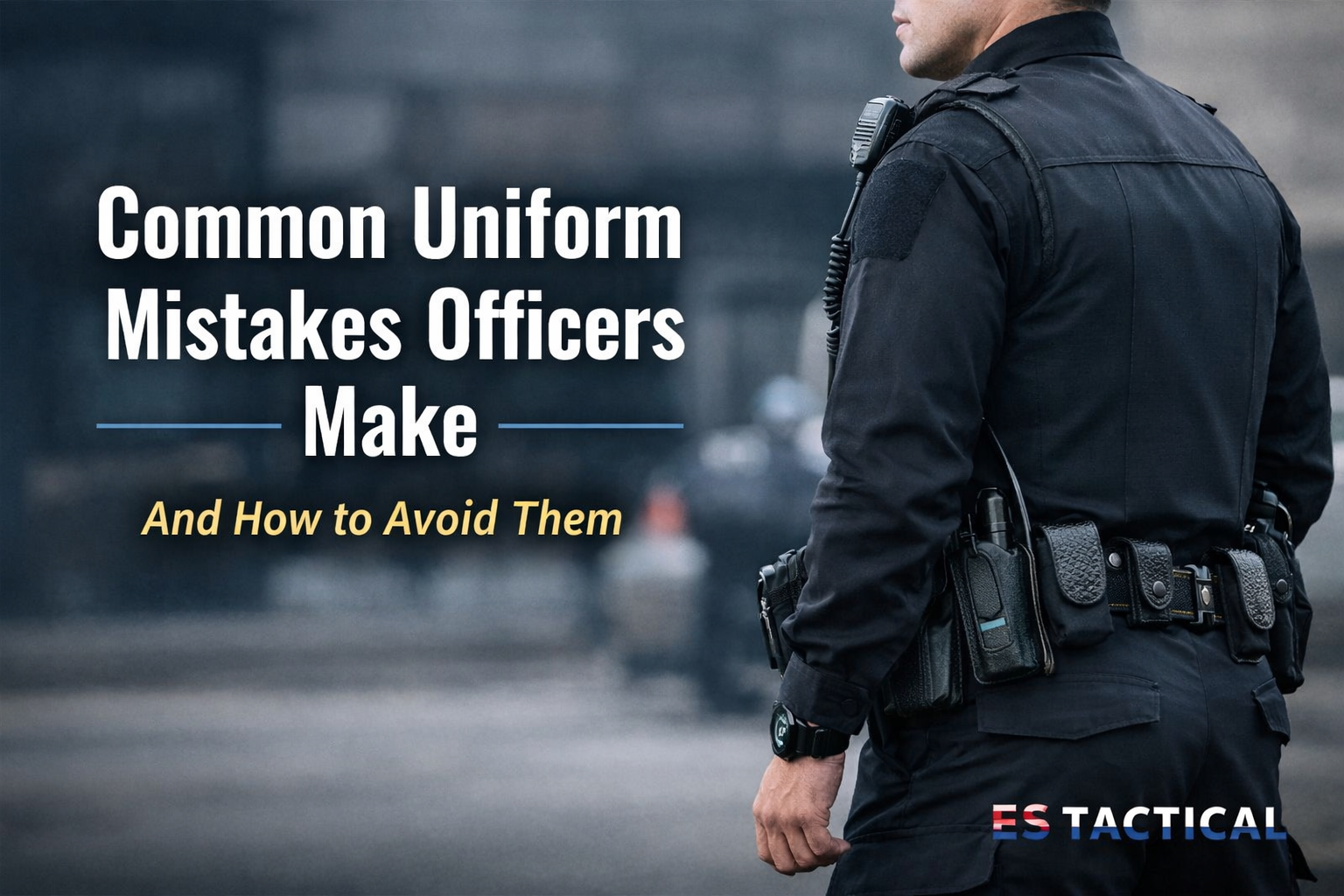
A law enforcement uniform is more than just a dress code—it’s a critical part of an officer’s safety, mobility, and professional image. From patrol shifts to formal inspections, the way a uniform fits, functions, and is maintained directly impacts performance on duty.
Unfortunately, many officers—especially recruits or those purchasing gear on their own—make common uniform mistakes that lead to discomfort, reduced mobility, or even safety risks. The good news? Most of these issues are easy to avoid with the right knowledge and support.
At Es Tactical, we work closely with officers and departments across Missouri, and we see these mistakes regularly. Here’s a breakdown of the most common uniform errors—and how to avoid them.
1. Wearing the Wrong Size or Poorly Fitted Uniform
One of the most frequent mistakes officers make is wearing uniforms that don’t fit properly. This often happens when uniforms are ordered in bulk without proper fittings or when officers guess their size.
Why This Is a Problem
-
Restricts movement during foot pursuits or defensive tactics
-
Causes discomfort during long shifts
-
Creates an unprofessional appearance
How to Avoid It
-
Always measure waist, inseam, chest, and sleeve length accurately
-
Try uniforms on with your full duty belt and gear
-
Use professional alteration services to fine-tune the fit
A properly fitted uniform improves confidence, mobility, and endurance on duty.
2. Choosing Appearance Over Function
Some officers prioritize how a uniform looks rather than how it performs. While professionalism matters, tactical functionality should always come first.
Common Examples
-
Pants that look sharp but restrict knee movement
-
Shirts without stretch panels or ventilation
-
Lightweight fabrics that wear out quickly
How to Avoid It
-
Choose uniforms designed specifically for law enforcement use
-
Look for features like ripstop fabric, gusseted crotches, and articulated knees
-
Balance professional appearance with tactical performance
A uniform should work with you—not against you.
3. Overloading Pockets and Duty Gear
Tactical pants and shirts offer multiple pockets, but more storage doesn’t mean you should carry everything at once.
Why This Causes Issues
-
Excess weight strains hips and lower back
-
Slows reaction time
-
Causes uneven wear and sagging
How to Avoid It
-
Carry only essential items during each shift
-
Use your duty belt for frequently accessed tools
-
Distribute weight evenly between belt and uniform
Smart gear placement reduces fatigue and long-term injury risk.
4. Ignoring Fabric and Climate Considerations
Wearing the same uniform year-round without considering climate is another common mistake—especially in areas with hot summers and cold winters.
Problems This Creates
-
Overheating during summer patrols
-
Poor insulation during cold-weather operations
-
Increased sweat, odor, and fabric breakdown
How to Avoid It
-
Choose lightweight, moisture-wicking uniforms for warm weather
-
Use heavier or layered uniforms for winter patrols
-
Look for fabrics with stain resistance and breathability
The right fabric improves comfort and helps uniforms last longer.
5. Skipping Uniform Maintenance and Care
Even the best uniforms won’t perform well if they aren’t maintained properly.
Common Maintenance Mistakes
-
Washing uniforms with harsh detergents
-
Using high heat that breaks down fibers
-
Ignoring small tears or loose stitching
How to Avoid It
-
Follow manufacturer washing instructions
-
Wash tactical uniforms separately
-
Repair minor damage before it worsens
Proper care extends the life of your uniform and keeps it inspection-ready.
6. Wearing Non-Approved or Inconsistent Gear
Departments often have strict uniform and gear standards, but officers sometimes mix brands or styles without realizing it.
Why This Matters
-
Can violate department policy
-
Creates inconsistency across units
-
May cause issues during inspections or court appearances
How to Avoid It
-
Confirm department-approved uniform brands and colors
-
Order from a trusted supplier familiar with agency standards
-
Keep backup uniform items on hand
Consistency reflects professionalism and department unity.
7. Neglecting Alterations and Custom Adjustments
Many officers assume uniforms should fit “out of the box,” but most require some level of adjustment.
Issues Caused by Skipping Alterations
-
Pants dragging or bunching at the ankles
-
Shirts pulling when seated or reaching
-
Poor alignment with duty belts and holsters
How to Avoid It
-
Use professional alteration services tailored to tactical uniforms
-
Adjust uniforms with full gear worn during fitting
-
Re-check fit after weight or gear changes
A customized fit enhances comfort and on-duty efficiency.
Why Proper Uniform Choices Matter
Avoiding these common mistakes isn’t just about comfort—it’s about safety, performance, and professionalism. A well-fitted, well-maintained uniform helps officers:
-
Move freely and react faster
-
Stay comfortable during long shifts
-
Present a professional image to the public
At Es Tactical, we help officers avoid these mistakes by offering expert guidance, trusted uniform brands, professional alterations, and department ordering support.
Conclusion
Uniform mistakes are common—but they’re also completely avoidable. By choosing the right fit, focusing on function, maintaining gear properly, and working with a knowledgeable supplier, officers can ensure their uniforms support them every step of the way.
If you’re upgrading your uniform or outfitting a department, visit Es Tactical in Excelsior Springs, Missouri. We’re proud to support law enforcement professionals with gear that performs as hard as they do.
Post a comment
Related Posts
March 16, 2026
Common Uniform Mistakes Officers Make (And How to Avoid Them)
A law enforcement uniform is more than just a dress code—it’s a critical part of…
January 13, 2026
How to Choose the Right Tactical Pants for Law Enforcement Duty
When you’re on duty, every piece of your uniform matters. For law enforcement professionals, tactical…